Turn walking time into lower injury costs.
Repetitive walking, standing, and load-bearing wear your team down — and musculoskeletal injuries are among the most common and most expensive claims in transportation, warehousing, and healthcare.
US support · Fast shipping · Financing available
The cost of MSK injuries
Repetitive long-distance walking on hard concrete floors is a leading cause of lower extremity musculoskeletal disorders. These injuries drive workers' compensation claims, extended absences, and long-term workforce attrition.
Less strain, fewer claims, real savings
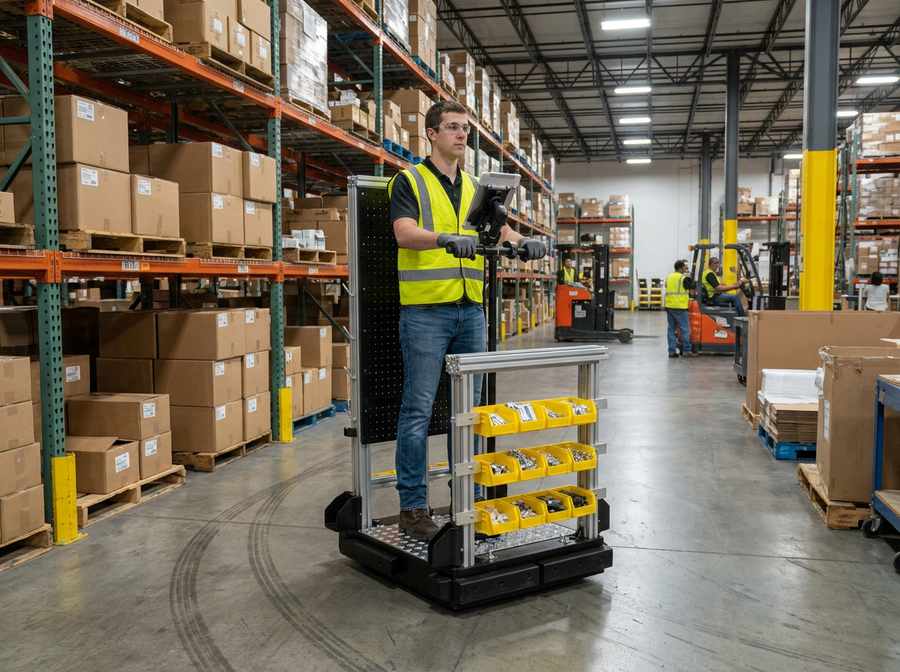
Less walking
Powered mobility cuts the miles your team covers every shift.
Less fatigue
Fresher workers at hour eight than at hour one.
Fewer claims
Reducing repetitive strain reduces the injuries that drive claim costs.
Built to prove its own value
Our systems capture movement and utilization data, so you can compare powered vs. on-foot work — distance, trips, idle time, and zone coverage — and tie it back to safety and productivity outcomes.
Estimate your savings
See the labor hours and cost your team could recover by cutting on-foot transit. Adjust the assumptions to match your operation.
Estimates only, based on the figures you enter. TexTrack reduces on-foot transit and carrying but does not by itself guarantee savings or injury prevention; actual results depend on layout, process, adoption, and site conditions.
Estimates only, based on the figures you enter. TexTrack reduces on-foot transit and carrying but does not by itself guarantee savings or injury prevention; actual results depend on layout, process, adoption, and site conditions.
Want the ROI model for your facility?
We'll walk you through the numbers using your headcount, footprint, and claim history.